THE Pan Niger Delta Forum, PANDEF, has condemned, in strong terms, the alleged recurring persecution and harassment of persons from the South-South geopolitical zone by the Economic and Financial Crimes Commission (EFCC), over alleged cases of corruption.
PANDEF, in a statement, by its National Publicity Secretary, Hon. Ken Robinson, noted that the continued “media trial” and persecution of former public office holders, particularly from the South-South zone and other parts of Southern Nigeria, by the anti-graft agency, “is not only unethical but despicable and irksome.”
It urged the anti-graft body to stop the egregious practice stressing, “according to our laws, an accused is “innocent until proven guilty” by a competent court of law.”
The statement reads “PANDEF as a responsible organization would not condone corruption in any way but it is the flagrancy and snobbery with which the EFCC carries out its operations that is upsetting. The EFCC has continued to conduct its operations in a manner that depicts complete disrespect for the rule of law and fundamental human rights of citizens, as enshrined in the 1999 Constitution (as amended).
“More disturbing is the selectiveness of its operations; from 2016 to date, under the administration of President Muhammadu Buhari, not less than 30 high profile persons from the South-South geopolitical zone have been harassed, persecuted and prosecuted, mostly, in the “court of public opinion”, rather than procedural prosecution in competent courts of law.
Our people have continued to be maligned and denigrated by the EFCC and other state agencies; some have been hassled to death. These issues are well documented in the public sphere. Let EFCC stop persecuting our people!
“The case of retired Lieutenant General Kenneth Minimah, a former Chief of Army Staff, is one of the most preposterous. The periodic resurgence of so-called charges against Minimah and two other serving senior Army officers, in the media, since 2016, further substantiates concerns in the region that there is a determined schedule by antagonists of the South-South geopolitical zone and indeed the Niger Delta region; to humiliate and discredit prominent persons from the region, to erode the zone of credible leadership.
The Academic Staff Union of Universities has postponed its decision on strike, saying that consultations are still ongoing.
This was contained in a press statement issued by the union after its National Executive Council meeting.
The meeting held at its Festus Iyayi National Secretariat, University of Abuja, on Saturday, December 18, 2021 to review the level of government’s implementation of the FGN-ASUU Memorandum of Action of December 23, 2020 and other related matters.
In the press statement titled, ‘Enough of blackmail’, signed by ASUU president, Prof Emmanuel Osodeke, the lecturers regretted that the Federal Government had turned its back on the plan to set up an inter-ministerial committee to review the draft Renegotiated 2009 FGN-ASUU Agreement.
Earlier, ASUU had announced plans to embark on a strike over the Federal Government’s failure to meet its demands.
Apart from the Earned Academic Allowances, ASUU said its demands included the review of the NUC Act to curb the proliferation of universities by state governments who are not funding the existing ones; adoption of the University Transparency Accountability Solutions (UTAS) with concurrent discontinuance of the Integrated Payroll and Personnel Information System (IPPIS) and distortion in salary payment.
Others are the release of accumulated promotion arrears; and the review and signing of the draft document on the Renegotiation of 2009 ASUU-FGN Agreement.
Part of the statement read, “NEC was worried by the spirited efforts of government agents to reduce the demands of ASUU to a regime of intermittent payment of watered-down revitalisation fund and release of distorted and grossly devalued Earned Academic Allowances.
“ASUU shall not relent in demanding improvement in the welfare and conditions of service of our members. However, we shall resist any attempt to blackmail the union and derail our patriotic struggle for a productive university system by official propaganda founded on tokenism and crumb-sharing.
“NEC concluded that government has failed to satisfactorily address all the issues raised in the 2009 FGN-ASUU Agreement and subsequent MoUs and MoAs.
“However, considering the ongoing intervention and consultation efforts, NEC resolved to review the situation at a later date with a view to deciding on the next line of action.”
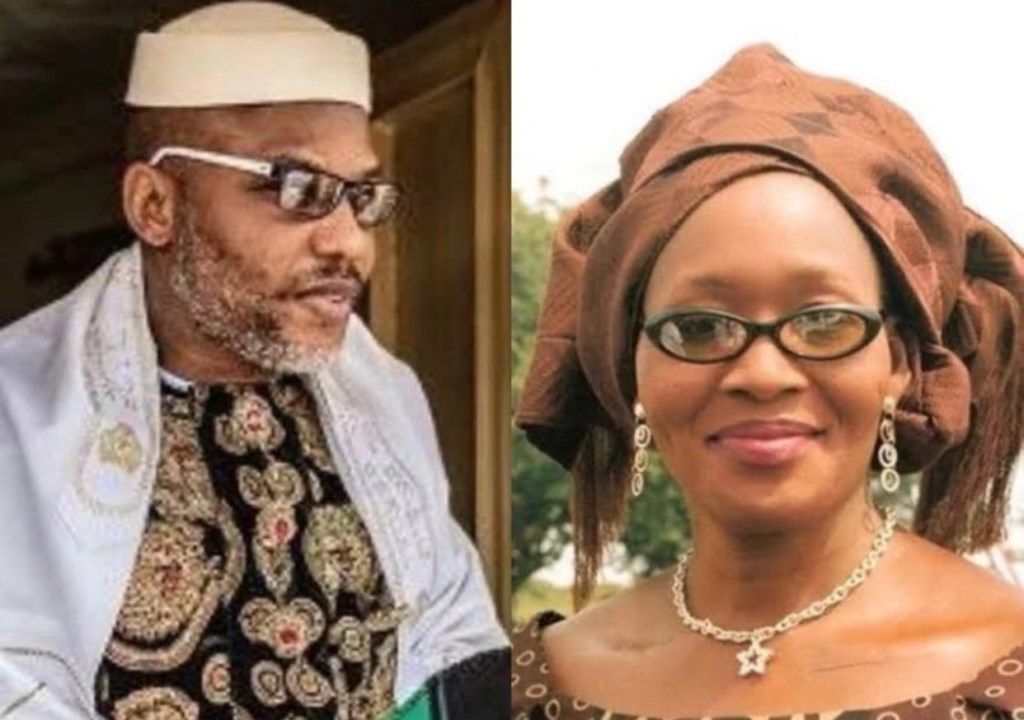
Controversial investigative journalist, Kemi Olunloyo, has predicted the release of Nnamdi Kanu, the leader of the Indigenous People of Biafra (IPOB).
In a post on her Twitter handle on Thursday, Olunloyo stated that the Muhammadu Buhari-led federal government may drop all charges against the pro-Biafra activist.
She recalled that she had told Nigerians last month that the IPOB leader would be released soon.
Kemi Olunloyo wrote: “This time next week I’m predicting that Mazi Nnamdi Kanu will be released from DSS Custody and all his federal charges dropped.
“He may be given exile stipulations but then he’s a Nigerian National. I told you FIRST last month that he will be released soon.”
Naija News reports that Nnamdi Kanu is facing an amended 7-count charge bordering on treasonable felony and acts of terrorism which were brought against him by the Federal Government after his re-arrest and repatriation to Nigeria in June this year.
The IPOB leader has been in the custody of the Department of State Services (DSS) from where he attends his court sessions in Abuja amidst heavy security.
Justice Binta Nyako had adjourned Kanu’s case till January 19 and 20, 2022, for trial.
However, the IPOB leader is set to appear in an emergency court session scheduled for today, in what some sources say is a move to grant the Biafra activist bail.
Former President of Nigeria, Goodluck Jonathanhas declared that it will be a dream fulfilled for him if electronic transmission of results can be deployed during the 2023 general elections in Nigeria.
He said this will deepen democracy in Nigeria and show that the country is making progress in its democratic journey.
Jonathan added that the adoption of electronic transmission of results will enhance the transparency of the electoral process and further guarantee free and fair elections in Nigeria.
He added his voice to the growing demands for the adoption of electronic transmission of results in Nigeria while speaking on Wednesday in Abuja on a paper titled ‘Human Security and National Development: The Whole Society Approach’ at the National Defence College Course 30 Inauguration Lecture.
The former Nigerian president also cautioned the National Assembly not to be a stumbling block in the moves and aspirations of the Independent National Electoral Commission (INEC) to adopt the electronic transmission of results.
He said: “I have always made the case that electronic voting is the way to go, if we truly desire to secure the credibility and integrity of our elections. It is difficult, therefore, to understand why the argument against the possibility of electronic transmission of election results continues to subsist, despite all the advancement made in information and communication technology, over the years.
I want to appeal to members of the National Assembly to always ensure that they do not embark on measures that could hinder the progress and independence of INEC. If they have to amend the electoral law, they should do so in a manner that would enhance INEC’s processes in its performance of its duties, especially through the adoption of innovations in ICT to aid its operations.
“Since the beginning of the Fourth Republic, our nation has made incremental progress towards deepening the roots of the nation’s democracy. The fact that questions are today being asked by the people on the direction of that progress means that Nigerians appreciate democracy but expect us to do more to make it work better for our people and the country.
“There is the need for those involved in the ongoing electoral reforms to review their efforts and ask themselves some tough questions. That way, they will be able to determine whether they are advancing the course of democracy by working to enhance and protect the constitutionally guaranteed duties of INEC or seeking to encumber the body by assuming positions, capable of negatively affecting the exercise of its independence, in the conduct of elections.”
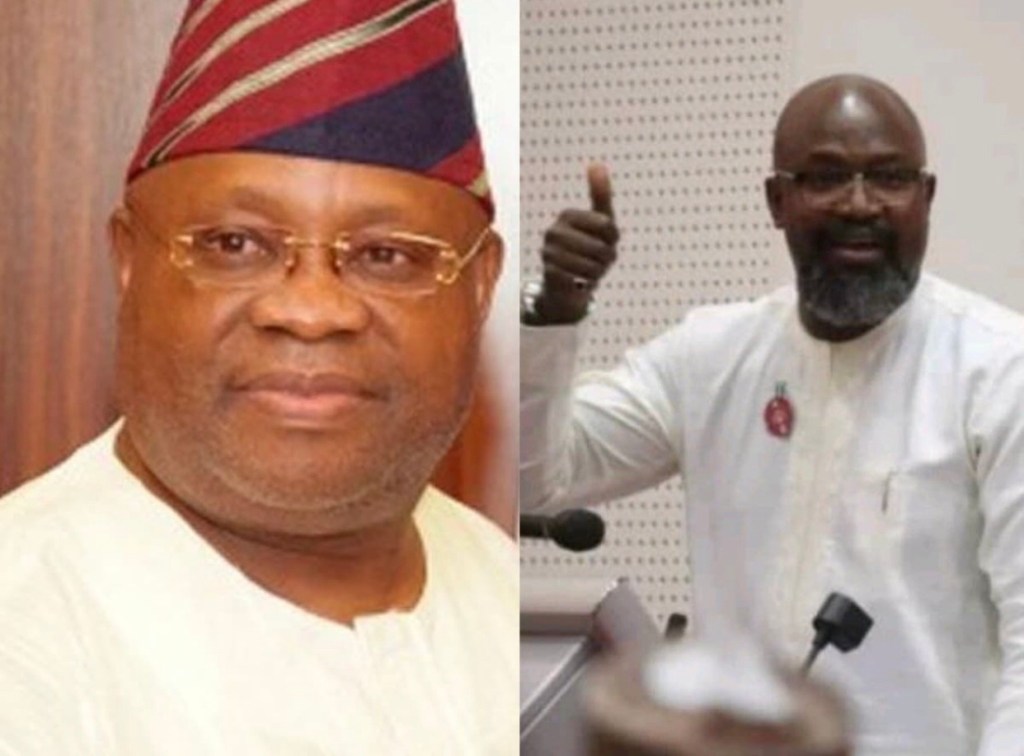
Osun State 2022 governorship race has just become more interesting as Dele Adeleke on Friday declared his interest to contest the highest political position in the state.
Naija News understands that Adeleke picked a running ticket under the umbrella of the Peoples Democratic Party, PDP, the same party as his uncle, Senator Ademola Adeleke.
The new candidacy increased the number of candidates contesting for the same position under PDP to five, having Senator Ademola Adeleke, Alhaji Fatai Akinbade, Dr Akin Ogunbiyi, Soji Omirin and Dotun Babayemi already on the list.
There are assertions from political watchers that Dele, getting into the contest with his uncle may tear their family apart.
Naija News understands that Dele was at the PDP National Secretariat in Abuja earlier on Friday (today), to pick the party’s expression of interest and nomination forms for the gubernatorial primaries for the sum of N21 million.
This will have him run against his uncle in the next PDP gubernatorial primaries in the state.
Dele, who is a financial expert, was the Returning Officer at the 2018 gubernatorial election in the station, where he was responsible for marshalling points to defend his uncle at both the Independent National Electoral Commission (INEC) and Tribunal to the Supreme Court, where the judgment favoured the eventual winner, incumbent Governor Adegboyega Oyetola.
Considering his performances in the previous electoral job, supporters clamoured for his participation in the next election as against his uncle Senator Ademola Adeleke.
There are assertions also that Dele has the backing of Governor Seyi Makinde of Oyo State and some leaders in the South West, Naija News reports.
A yet to be identified Nigerian man has slumped and died after reading the result of a DNA test conducted on his only son.
In the video that has become a growing sensation, a supposed friend of the deceased via Facebook narrated how the abroad-based man caught his wife cheating on the social video making app, Snapchat then returned to Nigeria and conducted a paternity test on his son, and slumped to his death when he discovered the results revealed he is not the boy’s biological father.
The video has been making rounds on social media with Nigerians expressing disbelieve and shock over the story.
The official rate today, Wednesday December 15th, for $1 dollar to naira = ₦413.87/$1.
According to the data at the FMDQ Security Exchange where forex is traded officially, exchange rate between the naira and the US dollar opened at ₦413.87/$1 on Wednesday 15th, after it closed at ₦414.80 to a $1 on Tuesday, 14th December 2021.
How much is exchange rate of Dollar to Naira in Black Market today?
The exchange rate for a dollar to naira at Lagos Parallel Market (Black Market) players buy a dollar for N560 and sell at N563 on Wednesday, December 15th 2021, according to sources at Bureau De Change (BDC).
Please note that the Central Bank of Nigeria (CBN)does not recognise the parallel market (black market), as it has directed individuals who want to engage in Forex to approach their respective banks.
Trading at the official NAFEX window
The exchange rate between the naira and the US dollar opened at ₦413.87/$1 on 15th December 2021 after closing at 414.80/$ on 14th December. Showing a change of -0.04%.
According to data from FMDQ, forex turnover stands at $377.88 million.
Meanwhile, Nigeria’s public debt profile has risen to ₦38.005tn or $92.626bn the Debt Management Office (DMO)confirmed on Tuesday.
1.It is the ability to analyze numbers and to manage large data sets and interpret them correctly.
2.The process of extracting useful information from data, writing articles based on the information and embedding visualizations in the articles that help readers understand the significant of the story or allow them to pinpoint data that relate to them.
3.The process of extracting useful information from data, writing articles based on the information and embedding visualizations in the articles that help readers understand the significant of the story or allow them to pinpoint data that relate to them.
4.Is a journalism specialty reflecting the increased role that numerical data is used in the production and distribution of information in the digital era. It reflects the increased interaction between content producers (journalist) and several other fields such as design, computer science, and statistics.
Data journalism or data-driven journalism (DDJ) is a journalistic process based on analyzing and filtering large data sets for the purpose of creating or elevating a news story.
Data journalism is a type of journalism reflecting the increased role that numerical data is used in the production and distribution of information in the digital era. It reflects the increased interaction between content producers (journalists) and several other fields such as design, computer science and statistics. From the point of view of journalists, it represents “an overlapping set of competencies drawn from disparate fields”.
Data journalism has been widely used to unite several concepts and link them to journalism. Some see these as levels or stages leading from the simpler to the more complex uses of new technologies in the journalistic process.
Many data-driven stories begin with newly available resources such as open source software, open access publishing and open data, while others are products of public records requests or leaked materials. This approach to journalism builds on older practices, most notably on computer assisted reporting (CAR) a label used mainly in the US for decades. Other labels for partially similar approaches are “precision journalism”, based on a book by Philipp Meyer, published in 1972, where he advocated the use of techniques from social sciences in researching stories. Data-driven journalism has a wider approach. At the core the process builds on the growing availability of open data that is freely available online and analyzed with open source tools. Data-driven journalism strives to reach new levels of service for the public, helping the general public or specific groups or individuals to understand patterns and make decisions based on the findings. As such, data driven journalism might help to put journalists into a role relevant for society in a new way.
An average of 13 persons were abducted daily in Nigeria in the first half of 2021, according to a report by SBM Intelligence, bringing to 2,371 the number of persons kidnapped in the country within the first six months of the year.
SBM Intelligence is a leading research consultancy group, versatile in the area of primary data gathering, and analyses of data that provides clarity relating to political, economic and social issues in Nigeria and West Africa.
This came as the former senator representing Kaduna central, Shehu Sani said yesterday that the north-west would be a better place, if the Federal Government could deal with bandits with the same vigour used against secessionists.
This is even as the abductors of the Emir of Kajuru, Alhassan Adamu, yesterday released the monarch but held on to his family members.
Similarly, Gombe State government said yesterday it had deployed local security in all institutions in the state to compliment the efforts of the police and other security agencies in efforts to ward off bandits.
On the number of people kidnapped in the last six months, the SBM report covered abductions from January to June.
It indicated that a total of 2,371 persons were abducted across 36 states of the federation and the Federal Capital Territory, FCT.
The tally was derived from media reports and the national security tracker of the Council of Foreign Relations.
Abduction — the new oil money of kidnappers
According to the report, N10 billion ($19.96 million as of June 30) was demanded as ransom for the kidnap victims.
However, the report did not state the total amount paid.
The highest number of kidnap victims, about 605, was recorded in February.
This was closely followed by March with 534 kidnap victims; May, 355 kidnap victims; while April, January and June had 316, 284 and 277 respectively.
A live kidnapping scene along kaduna-Abuja expressway
Niger State, the hotbed of kidnapping
The report indicated that Niger State recorded the highest number of persons abducted
with 643 victims in 28 kidnap incidents, while 58 people were killed during the abductions.
This was followed by Zamfara State with 519 kidnap victims in seven incidents, leading to the death of 22 people, while Kaduna State recorded 360 kidnap victims in 26 incidents, leading to the deaths of 41 persons.
The kidnap victims in other states are; Abia (6), Abuja (50), Adamawa (3), Akwa Ibom (2), Anambra (14), Bauchi (3), Bayelsa (7), Benue (6), Borno (1), Cross River (4), Delta (51), Ebonyi (5), Edo (18), Ekiti (14), Enugu (15), Gombe (1), Imo (25), Jigawa (2), Kano (3), Katsina (236), Kebbi (81), Kogi (31) and Kwara (10).
Others include: Lagos (6), Nasarawa (44), Ogun (26), Ondo (17), Osun (23), Oyo (61), Plateau (10), Rivers (14), Sokoto (10), Taraba (46), and Yobe (4).
Schools were often targeted in the abductions that took place in the first half of 2021, with hundreds of students taken hostage in the north-west.
Reacting to the high incidents of kidnapping in the country, particularly by bandits, Shehu Sani, a former senator representing Kaduna central said, the north-west will be a better place if the Federal Government could deal with bandits with the same vigour used against secessionists.
From Obasanjo to Buhari… how FG’s debt profile surged 658% to N26.9trn in 21 years.
Nigeria’s public debt has been on the rise. Despite securing debt relief during the Olusegun Obasanjo-led administration, successive governments have continued on a borrowing spree — the federal government’s component of the public debt surging 658 percent to N26.9 trillion in the last 21 years.Advertisement
This has raised concerns among Nigerians on the debt sustainability of the country amid dwindling revenue to meet the debt obligations to creditors.
Within two weeks, the senate approved three different loan requests by President Muhammadu Buhari.
On July 7, 2021, the upper chamber approved a loan request of N2.343 trillion, approximately $6 billion and another$8.3 billion and €490 million.Advertisement
Defending one of the loan requests, the Debt Management Office (DMO) said it is part of a borrowing plan for the 2021 budget.
“The proposed new capital raising is the new external borrowing provided in the 2021 Appropriation Act to part finance the deficit in the budget. In other words, the new capital raising has already been approved in the budgetary process by the executive and legislative arms of government,” the DMO had said in a statement.
As of March 2021, Nigeria’s total public debt has hit N33.1 trillion ($87.24 billion) — an accumulation of borrowings from successive governments, of which most were borrowed since the return to democratic rule in 1999.
The overall public debt is the total debt accrued by federal, states, and the FCT from local and international lenders.
Of the N33.1 trillion, the federal government alone borrowed N26.91 trillion — this includes the FGN bonds, Sukuk, green bonds and Euro bonds.
Finally, after weeks of data aggregation, number crunching, dissecting and analyses of freedom of information (FOI) response from the Debt Management Office (DMO), TheCable presents findings that highlight how Nigeria’s aggressive borrowing defies its fiscal responsibility laws.
The analyses also include data from the DMO, National Bureau of Statistical (NBS), and fiscal papers from the Budget Office of the Federation.
FG DEBT CLIMBED 658% TO N26.9 TRILLION IN 21 YEARS
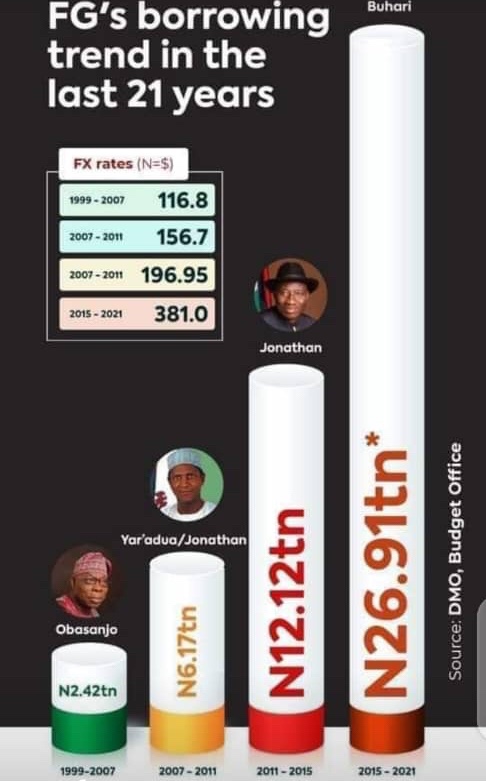
Data from the DMO seen by TheCable showed that federal government borrowings (local and foreign debt) climbed from N3.55 trillion in 1999 to N26.91 trillion at the end of March 2021 (the country’s latest official figure).
This represents a 658 percent increase in 21 years, comprising the administrations of Olusegun Obasanjo, Umar Musa Yar’Adua, Goodluck Jonathan, and the current Muhammadu Buhari.
HOW MUCH BUHARI BORROWED IN 6 YEARS
The Budget Office’s medium-term expenditure framework and fiscal strategy paper from 2015 showed that the Buhari-led administration incurred N7.63 trillion in domestic debt from June 2015 to December 2020.
On external borrowings, President Buhari increased debt from $7.3 billion in 2015 to $28.57 billion as of December 2020. This means that the president incurred $21.27 billion on foreign loans to the country’s debt portfolio.
The country’s exchange rate moved from N197 to a dollar in 2015 to N381 at the end of December 2020.
Analysis of consolidated debt showed that the external debt increased by 291.37 percent while domestic debt grew by 86.31 percent in the last six years of the Buhari government.
Overall, the Buhari-led government has had an accumulated debt of N17.06 trillion as of March 2021, using the N381 exchange rate. This represents a 173.2 percent increase from when he was elected president in 2015.
DEBT PROFILE UNDER JONATHAN’S ADMINISTRATION
At the beginning of former President Goodluck Jonathan’s tenure in 2011, the federal government had an accumulated debt of N6.17 trillion.
Analysis of the debt figure showed that local debt amounted to N5.62 trillion while foreign debt stood at $3.5 billion (about N548.65 billion, using the exchange rate of N156.7/$1).
By the end of 2015, the foreign debt component hit $7.3 billion, while domestic debt increased by N8.4 trillion. The country’s exchange rate also stood at N197/$1.
Overall, the federal government component of the total public debt increased from N6.17 trillion in 2011 to N9.8 trillion in 2015, representing an increase of N3.63 trillion or 58.8 percent.
YAR’ADUA/JONATHAN’S BORROWINGS
Under the Umar Musa Yar’Adua/Goodluck Jonathan-led government between 2007 and 2011, domestic debt of the federal government moved from N2.17 trillion to N5.62 trillion. The foreign component of the debt also increased from $2.11 billion to $3.5 billion within the period.
The country’s exchange rate also moved from N116.8/$1 to N156.7/$1.
The combined debt profile increased from N2.42 trillion to N6.17 trillion in four years, representing a 155 percent jump.
Of the debt figure, Jonathan completed the tenure from May 2010 to May 2011 after the death of Yar’Adua. The period saw a surge in the federal government’s debt from N4.94 trillion to N6.17 trillion. This represents a 24.9 percent increase in one year.
OLUSEGUN OBASANJO’S TENURE
During the tenure of former president Olusegun Obasanjo, the debt level of the federal government reduced from N3.55 trillion in 1999 to N2.42 trillion at the end of 2007.
The 8-year term of Obasanjo resulted in a dip in FG’s local and foreign debt level, representing a 31.8 percent decline.
The country’s exchange rate was between N98.02 to N116.8 to a dollar during the tenure.
Analysis of the figures showed that external debt decreased from $28.04 billion by 1999 to $2.11 billion at the end of 2007. However, the domestic component increased from N798 billion to N2.17 trillion within the same period.
The huge decline in foreign debt was a result of the substantial reduction following the pay-off of the outstanding debts owed to the London Clubs of Creditors in the first quarter of 2007.
So far, Buhari is the country’s biggest borrower, increasing public debt (FG component) by more than 173 percent. Next to the Buhari government is the Yar’Adua/Jonathan administration with a 155 percent surge in borrowing.
The current government violates important financial laws in the country — the Fiscal Responsibility Act, and the CBN Act 2007.
Last year, the government exceeded the fiscal borrowing threshold as stipulated in the fiscal act.
Zainab Ahmed, minister of finance, budget and national planning, admitted to this on the grounds that COVID-19 was good enough reason to breach the act.
The fiscal responsibility law provides a limit of three percent debt threshold for sustainability, but the president can “exceed the ceiling if there is a clear and present threat to national security or sovereignty of Nigeria”.
In 2020, the country’s budget deficit was at about four percent of GDP, clearly breaking the law.
On overdraft, section 38, sub-section 1 and 2, of the CBN Act said, “the Bank may grant temporary advances to the Federal Government in respect of temporary deficiency of budget revenue” and “the total amount of such advances outstanding shall not at any time exceed 5 percent of the previous year’s actual revenue of the Federal Government”.
By the end of 2020, CBN overdrafts to the Buhari government exceeded the limit by 69 percent of the revenue generated in 2019 – in a blatant violation of the apex bank rules. The government’s revenue in the year was N4.1 trillion, and overdraft stood at N2.9 trillion.
Also, Nigeria’s borrowing limit as a percent of GDP stood at 34.8 percent in 2020, well above 25 percent for the year. Earlier this year, the federal executive council (FEC) had strategically raised the borrowing limit to 40 percent in its Medium-term debt management strategy for Nigeria for the period 2020-2023.
While Nigeria’s debt-to-GDP is lower than those of its peers, its debt-to-revenue is too low to sustain the country. Of every N100 government makes in revenue, N97 now goes to debt servicing.
In the last four administrations, only Obasanjo’s team reduced public debt; his government recorded a 32 percent decline with the London Club agreement.
INCREASING PUBLIC DEBT WORRYING
While borrowing is required to support the economy, sustainability transparency and sustainable repayment plan are crucial.
Femi Oke, an economist, said Nigeria’s soaring high debt profile is not good for the country.
“The Nigerian government borrows in the worst possible way and in a very outdated manner. This causes a backlash to the government. Because Nigeria’s debts are not linked to any assets, we just go to the treasury bill market and borrow, at any rate, that anybody wants to give you,” he said.
“There are many other countries who borrow more than what Nigeria is borrowing and don’t have any problem paying back. They borrow intelligently and efficiently, in a way that their debts service themselves.
“A more efficient way of borrowing is for the Federal Government to migrate all the debts to asset-linked debts. This means structuring the borrowing transaction like investments. There must be an underlying asset to which borrowers can use to recover the principal they gave the country plus profit.”
Vahyala Kwaga, senior researcher and policy analyst at BudgIT, said the level of borrowing – specifically in 2021- is the highest it has been in the last six years.
“The government is borrowing more, spending more and earning less revenue. For context, the government budgeted about N5.37 trillion in revenue in 2020 but only earned a total of N3.42 trillion,” Kwaga said.
“There is also no commensurate rise in revenue to counteract the continuing rise in debt servicing. A casual look at the debt servicing level from 2015 to 2020 shows that the level has steadily increased since then.
“These amounts include debt servicing on interests for ‘ways and means’ and ‘sinking fund to retire maturing Loans.’”
NIGERIA’S ACTUAL DEBT COULD BE 48.7TRN
Wilson Erumebor, a senior economist at Nigerian Economic Summit Group, said Nigeria is a case where expenditure keeps rising, revenue not improving as expected, creating a wide fiscal deficit that is majorly financed by borrowing.
“While borrowing is required to support the economy, especially given the impact of the pandemic, what we need to be concerned about is how sustainable Nigeria’s debt position is,” he said.
“Debt has risen N33.1 trillion as of March 2021, an increase of 162.7% in the space of about five years.
“When we include AMCON’s liabilities and CBN’s ways and means, debt could amount to about N48.7 trillion, which is around 32 percent of GDP.
“Debt to GDP may seem quite low at 32 percent, we must understand that debt is serviced with revenues, so if debt servicing is increasing and revenue is not performing, then we have a problem.”
Erumebor suggests that the federal government must improve efficiency, transparency, blocking leakages, and deliver value on public projects, despite limited resources.
“We must work towards unlocking many sectors and many areas where the country can earn revenue.”
In 2020, the International Monetary Fund (IMF) said Nigeria’s low debt-to-GDP ratio is highly vulnerable to shocks.
“Despite Nigeria’s relatively low debt level, liquidity-based indicators-driven by low revenue mobilisation-remain concerning, with the interest bill representing a high share of government revenue (but low relative to GDP),” IMF said in its country’s report for Nigeria.
“Stress scenarios confirm the vulnerability of public debt to a low growth/wide primary deficit scenario. The interest-to-revenue ratio is particularly vulnerable to a real interest rate shock but remains sustainable.”
Recently, market researchers at United Capital also expressed concern over the country’s raising need.
The overall public debt is the total debt accrued by federal, states, and the FCT from local and international lenders.
Of the N33.1 trillion, the federal government alone borrowed N26.91 trillion — this includes the FGN bonds, Sukuk, green bonds and Euro bonds.
Finally, after weeks of data aggregation, number crunching, dissecting and analyses of freedom of information (FOI) response from the Debt Management Office (DMO), TheCable presents findings that highlight how Nigeria’s aggressive borrowing defies its fiscal responsibility laws.
The analyses also include data from the DMO, National Bureau of Statistical (NBS), and fiscal papers from the Budget Office of the Federation.
FG DEBT CLIMBED 658% TO N26.9 TRILLION IN 21 YEARS Data from the DMO seen by TheCable showed that federal government borrowings (local and foreign debt) climbed from N3.55 trillion in 1999 to N26.91 trillion at the end of March 2021 (the country’s latest official figure).
This represents a 658 percent increase in 21 years, comprising the administrations of Olusegun Obasanjo, Umar Musa Yar’Adua, Goodluck Jonathan, and the current Muhammadu Buhari.
HOW MUCH BUHARI BORROWED IN 6 YEARS The Budget Office’s medium-term expenditure framework and fiscal strategy paper from 2015 showed that the Buhari-led administration incurred N7.63 trillion in domestic debt from June 2015 to December 2020.
On external borrowings, President Buhari increased debt from $7.3 billion in 2015 to $28.57 billion as of December 2020. This means that the president incurred $21.27 billion on foreign loans to the country’s debt portfolio.
The country’s exchange rate moved from N197 to a dollar in 2015 to N381 at the end of December 2020.
Analysis of consolidated debt showed that the external debt increased by 291.37 percent while domestic debt grew by 86.31 percent in the last six years of the Buhari government.
Overall, the Buhari-led government has had an accumulated debt of N17.06 trillion as of March 2021, using the N381 exchange rate. This represents a 173.2 percent increase from when he was elected president in 2015.
DEBT PROFILE UNDER JONATHAN’S ADMINISTRATION At the beginning of former President Goodluck Jonathan’s tenure in 2011, the federal government had an accumulated debt of N6.17 trillion.
Analysis of the debt figure showed that local debt amounted to N5.62 trillion while foreign debt stood at $3.5 billion (about N548.65 billion, using the exchange rate of N156.7/$1).
By the end of 2015, the foreign debt component hit $7.3 billion, while domestic debt increased by N8.4 trillion. The country’s exchange rate also stood at N197/$1.
Overall, the federal government component of the total public debt increased from N6.17 trillion in 2011 to N9.8 trillion in 2015, representing an increase of N3.63 trillion or 58.8 percent.
YAR’ADUA/JONATHAN’S BORROWINGS
Under the Umar Musa Yar’Adua/Goodluck Jonathan-led government between 2007 and 2011, domestic debt of the federal government moved from N2.17 trillion to N5.62 trillion. The foreign component of the debt also increased from $2.11 billion to $3.5 billion within the period.
The country’s exchange rate also moved from N116.8/$1 to N156.7/$1.
The combined debt profile increased from N2.42 trillion to N6.17 trillion in four years, representing a 155 percent jump.
Of the debt figure, Jonathan completed the tenure from May 2010 to May 2011 after the death of Yar’Adua. The period saw a surge in the federal government’s debt from N4.94 trillion to N6.17 trillion. This represents a 24.9 percent increase in one year.
OLUSEGUN OBASANJO’S TENURE During the tenure of former president Olusegun Obasanjo, the debt level of the federal government reduced from N3.55 trillion in 1999 to N2.42 trillion at the end of 2007.
The 8-year term of Obasanjo resulted in a dip in FG’s local and foreign debt level, representing a 31.8 percent decline.
The country’s exchange rate was between N98.02 to N116.8 to a dollar during the tenure.
Analysis of the figures showed that external debt decreased from $28.04 billion by 1999 to $2.11 billion at the end of 2007. However, the domestic component increased from N798 billion to N2.17 trillion within the same period.
The huge decline in foreign debt was a result of the substantial reduction following the pay-off of the outstanding debts owed to the London Clubs of Creditors in the first quarter of 2007.
BUHARI, NIGERIA’S BIGGEST BORROWER, VIOLATING FINANCIAL LAWS So far, Buhari is the country’s biggest borrower, increasing public debt (FG component) by more than 173 percent. Next to the Buhari government is the Yar’Adua/Jonathan administration with a 155 percent surge in borrowing.
The current government violates important financial laws in the country — the Fiscal Responsibility Act, and the CBN Act 2007.
Last year, the government exceeded the fiscal borrowing threshold as stipulated in the fiscal act.
Zainab Ahmed, minister of finance, budget and national planning, admitted to this on the grounds that COVID-19 was good enough reason to breach the act.
The fiscal responsibility law provides a limit of three percent debt threshold for sustainability, but the president can “exceed the ceiling if there is a clear and present threat to national security or sovereignty of Nigeria”.
In 2020, the country’s budget deficit was at about four percent of GDP, clearly breaking the law.
On overdraft, section 38, sub-section 1 and 2, of the CBN Act, said, “the Bank may grant temporary advances to the Federal Government in respect of temporary deficiency of budget revenue” and “the total amount of such advances outstanding shall not at any time exceed 5 percent of the previous year’s actual revenue of the Federal Government”.
By the end of 2020, CBN overdrafts to the Buhari government exceeded the limit by 69 percent of the revenue generated in 2019 – in a blatant violation of the apex bank rules. The government’s revenue in the year was N4.1 trillion, and overdraft stood at N2.9 trillion.
Also, Nigeria’s borrowing limit as a percent of GDP stood at 34.8 percent in 2020, well above 25 percent for the year. Earlier this year, the federal executive council (FEC) had strategically raised the borrowing limit to 40 percent in its Medium-term debt management strategy for Nigeria for the period 2020-2023.
While Nigeria’s debt-to-GDP is lower than those of its peers, its debt-to-revenue is too low to sustain the country. Of every N100 government makes in revenue, N97 now goes to debt servicing.
In the last four administrations, only Obasanjo’s team reduced public debt; his government recorded a 32 percent decline with the London Club agreement.
INCREASING PUBLIC DEBT WORRYING While borrowing is required to support the economy, sustainability transparency and sustainable repayment plan are crucial.
Femi Oke, an economist, said Nigeria’s soaring high debt profile is not good for the country.
“The Nigerian government borrows in the worst possible way and in a very outdated manner. This causes a backlash to the government. Because Nigeria’s debts are not linked to any assets, we just go to the treasury bill market and borrow, at any rate, that anybody wants to give you,” he said.
“There are many other countries who borrow more than what Nigeria is borrowing and don’t have any problem paying back. They borrow intelligently and efficiently, in a way that their debts service themselves.
“A more efficient way of borrowing is for the Federal Government to migrate all the debts to asset-linked debts. This means structuring the borrowing transaction like investments. There must be an underlying asset to which borrowers can use to recover the principal they gave the country plus profit.”
Vahyala Kwaga, senior researcher and policy analyst at BudgIT, said the level of borrowing – specifically in 2021- is the highest it has been in the last six years.
“The government is borrowing more, spending more and earning less revenue. For context, the government budgeted about N5.37 trillion in revenue in 2020 but only earned a total of N3.42 trillion,” Kwaga said.
“There is also no commensurate rise in revenue to counteract the continuing rise in debt servicing. A casual look at the debt servicing level from 2015 to 2020 shows that the level has steadily increased since then.
“These amounts include debt servicing on interests for ‘ways and means’ and ‘sinking fund to retire maturing Loans.’”
NIGERIA’S ACTUAL DEBT COULD BE 48.7TRN Wilson Erumebor, a senior economist at Nigerian Economic Summit Group, said Nigeria is a case where expenditure keeps rising, revenue not improving as expected, creating a wide fiscal deficit that is majorly financed by borrowing.
“While borrowing is required to support the economy, especially given the impact of the pandemic, what we need to be concerned about is how sustainable Nigeria’s debt position is,” he said.
“Debt has risen N33.1 trillion as of March 2021, an increase of 162.7% in the space of about five years.
“When we include AMCON’s liabilities and CBN’s ways and means, debt could amount to about N48.7 trillion, which is around 32 percent of GDP.
“Debt to GDP may seem quite low at 32 percent, we must understand that debt is serviced with revenues, so if debt servicing is increasing and revenue is not performing, then we have a problem.”
Erumebor suggests that the federal government must improve efficiency, transparency, blocking leakages, and deliver value on public projects, despite limited resources.
“We must work towards unlocking many sectors and many areas where the country can earn revenue.”
In 2020, the International Monetary Fund (IMF) said Nigeria’s low debt-to-GDP ratio is highly vulnerable to shocks.
“Despite Nigeria’s relatively low debt level, liquidity-based indicators-driven by low revenue mobilisation-remain concerning, with the interest bill representing a high share of government revenue (but low relative to GDP),” IMF said in its country’s report for Nigeria.
“Stress scenarios confirm the vulnerability of public debt to a low growth/wide primary deficit scenario. The interest-to-revenue ratio is particularly vulnerable to a real interest rate shock but remains sustainable.”
Recently, market researchers at United Capital also expressed concern over the country’s rising debt sustainability risk. “The government has historically justified its rising debt profile by the compliant debt-to-GDP ratio of less than 30.0%,” the research firm said.
“However, we reiterate our position that the FG’s debt service cost as a percentage of revenue is a fairer reflection of the country’s debt sustainability position.”
At an overall public debt of N33.1 trillion ($87.24 billion), the implication remains that every Nigerian owes both local and foreign organisations N165, 500.
. “The government has historically justified its rising debt profile by the compliant debt-to-GDP ratio of less than 30.0%,” the research firm said.
“However, we reiterate our position that the FG’s debt service cost as a percentage of revenue is a fairer reflection of the country’s debt sustainability position.”
At an overall public debt of N33.1 trillion ($87.24 billion), the implication remains that every Nigerian owes both local and foreign organisations N165, 500.

 Site Title